
Bioprecipitation & Biogeochemistry
Bioprecipitation: Rain-making bacteria & microorganisms [ 1 ] .“A wide range of microorganisms voyage extensively through the atmosphere, depositing with rainfall,” [ 2 , 3 , 4 , 5 , 6 , 7 , 8 , 9 ] . Biogeochemistry: the chemical, geological, biological processes and reactions governing environmental composition, creating hospitable habitats microorganisms proliferate.
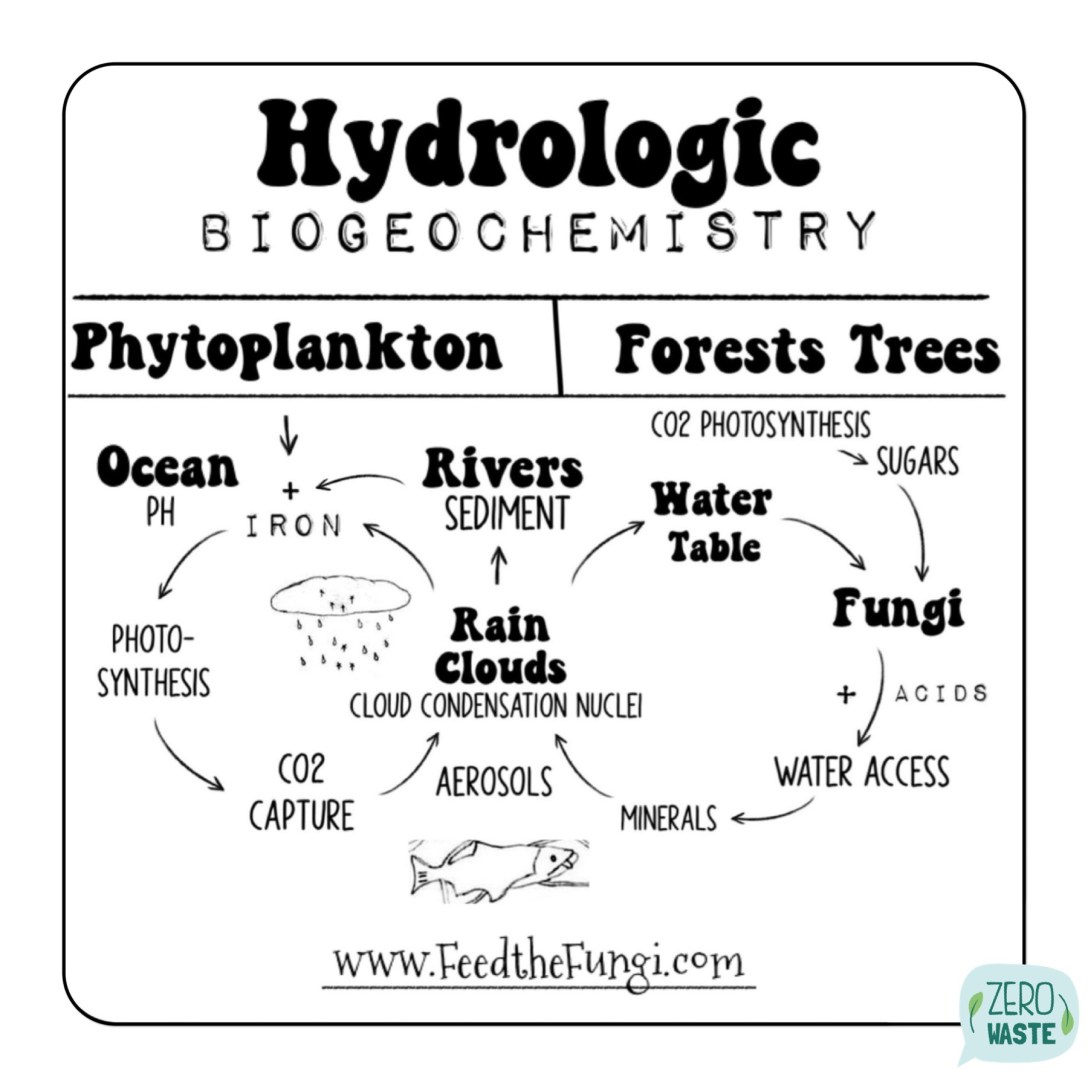
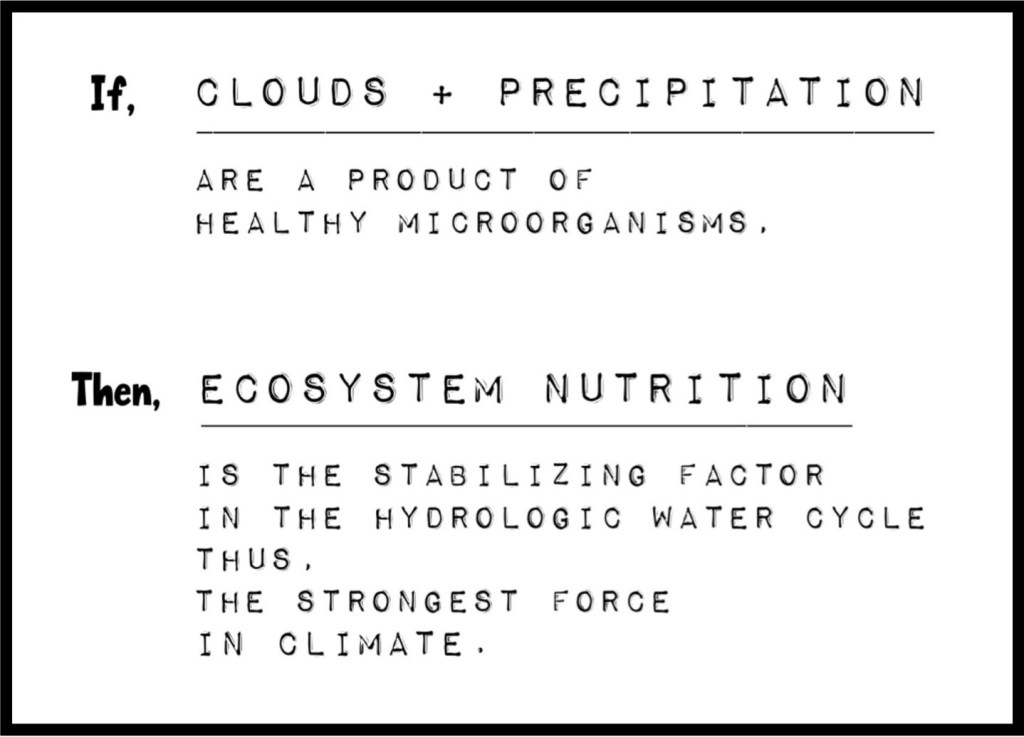
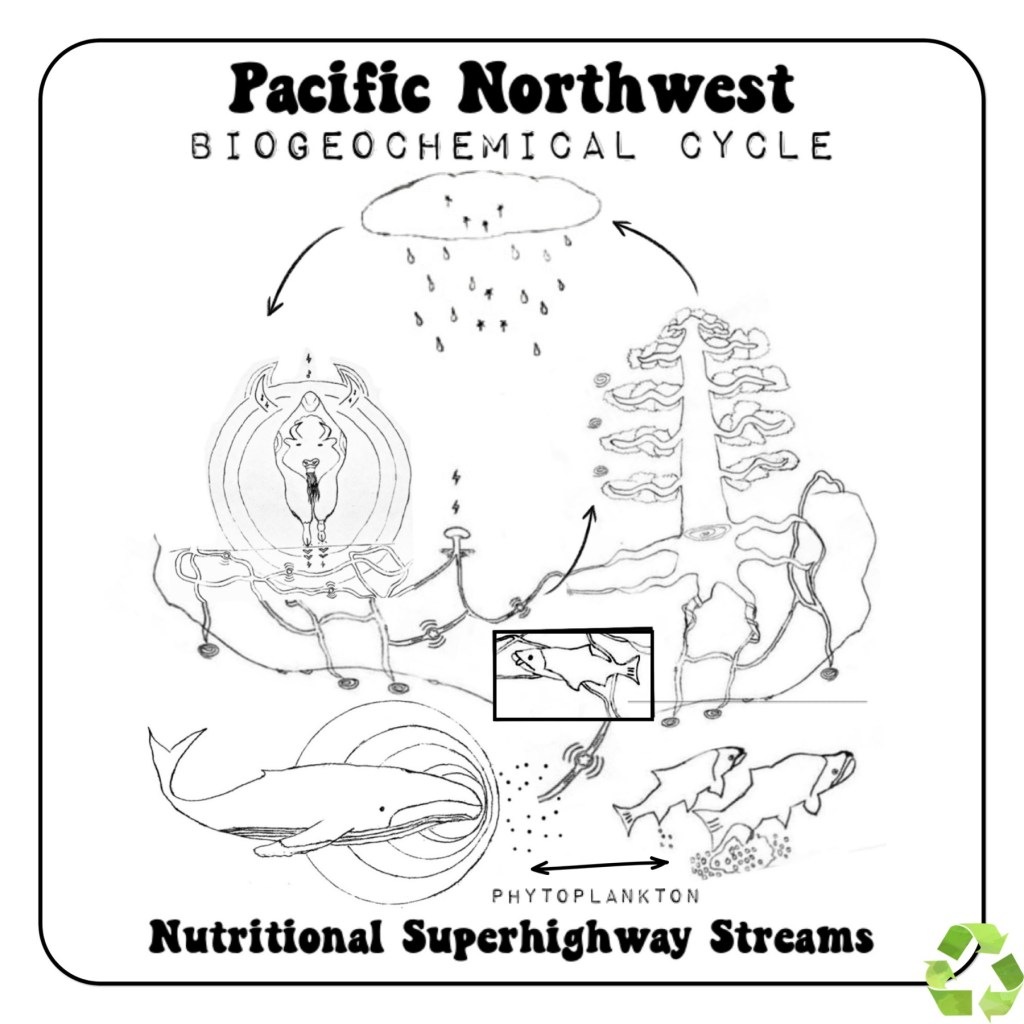
Phytoplankton Iron Fertilization: chlorophyll-synthesizing iron [ 10 ] accumulates biomass [ 11 ] imparting productivity to microorganisms dominant in marine aerosols, creating clouds & precipitation, (bioprecipitation) [ 12 , 13 , 14 ] . Simultaneously, the foundation of the marine food web [ 15 ] . Dams prevent these vital iron deposits (Biogeochemical cycle).
Global Phytoplankton Decline – [ 16 ] . “Phytoplankton biomass declines largest at the Earths poles.” [ 17 ]
River Sediment Fertilization: sustains crucial carbon sinks, marshes, wetlands & coastal habitats [ 18 , 19 , 20 ] . Dams deprive carbon stores, of sediments “life-giving” nutrients [ 21 ] .
“It’s like food – nutrients, minerals, and vitamins these systems need to grow – and dams are starving them of that.”
YALE
River Processes: Foundation to Marine Food Web, Water Cycle & Carbon Cycle
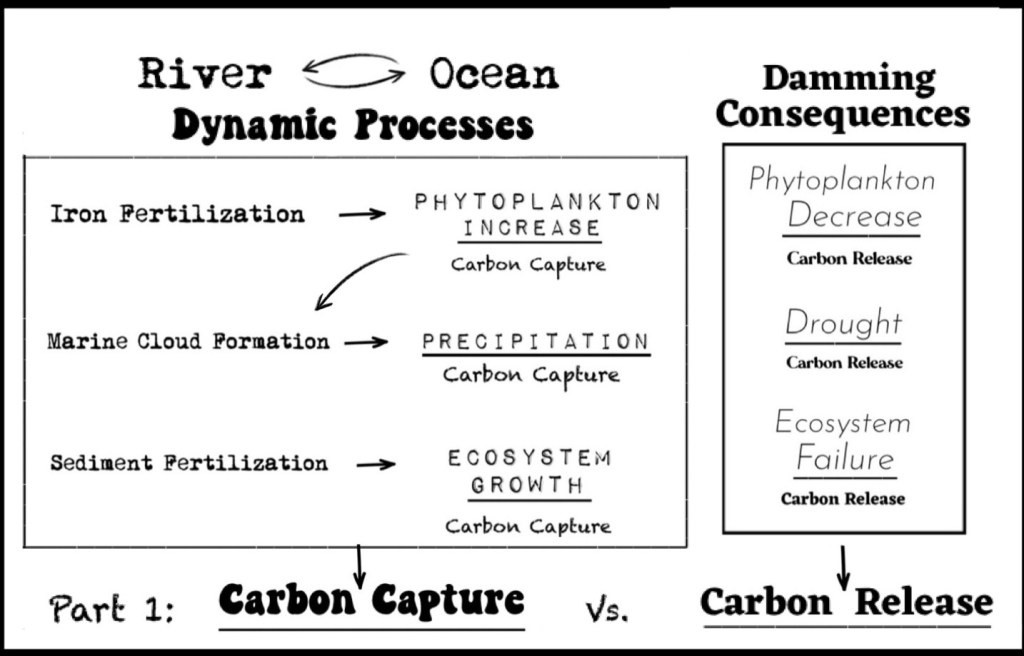
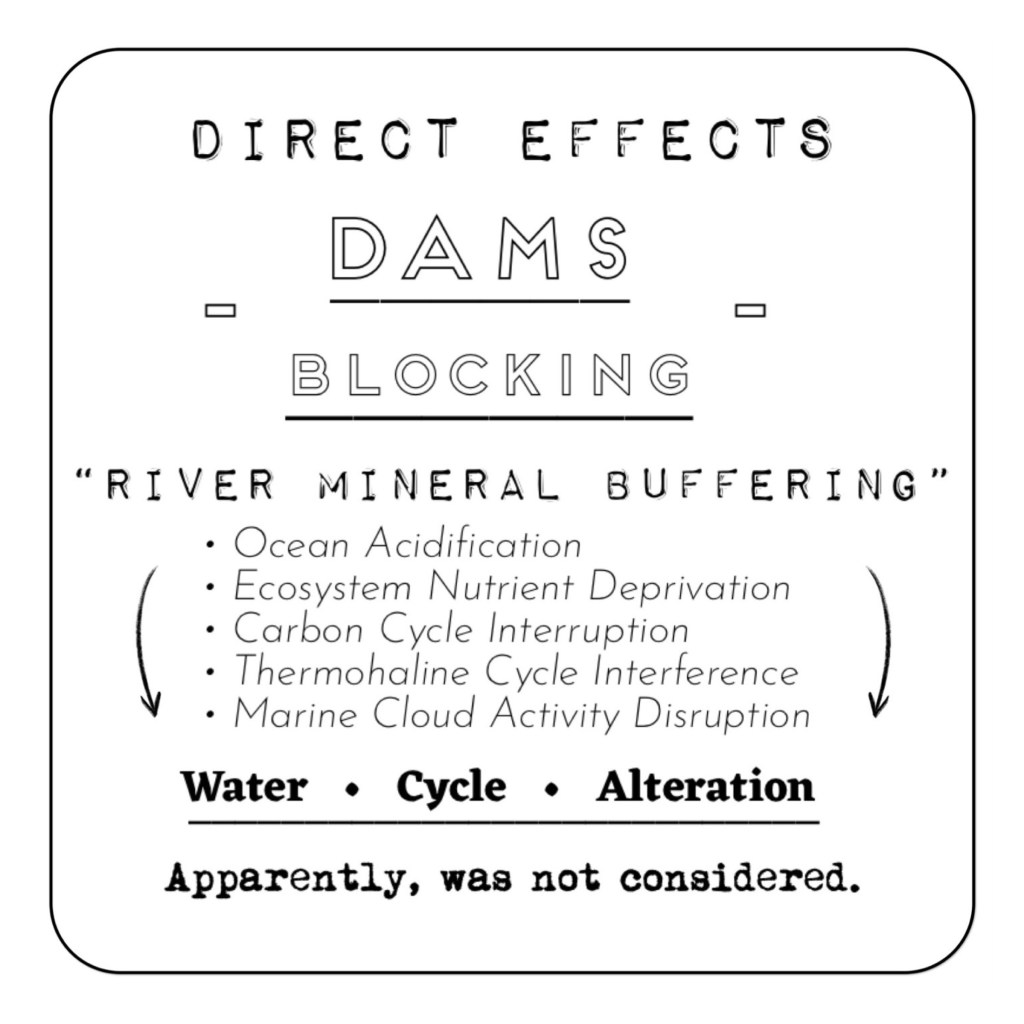
Ocean Nutrients Ferried to Forests & Through Rivers. Vital migrations [ 22 , 23 , 24 ] , spur growth/weathering, freeing “mineral buffering” sediments/chemicals stabilizing ocean ph [ 25 , 26 , 27 ] & maintaining watershed health [ 28 ] . Salty river drainage contributes to thermohaline circulation [ 29 , 30 ] . Dams lead to the opposite. Collectively, Ocean Collapse. [ 31 , 32 ]
River Processes Vitalize Oceans
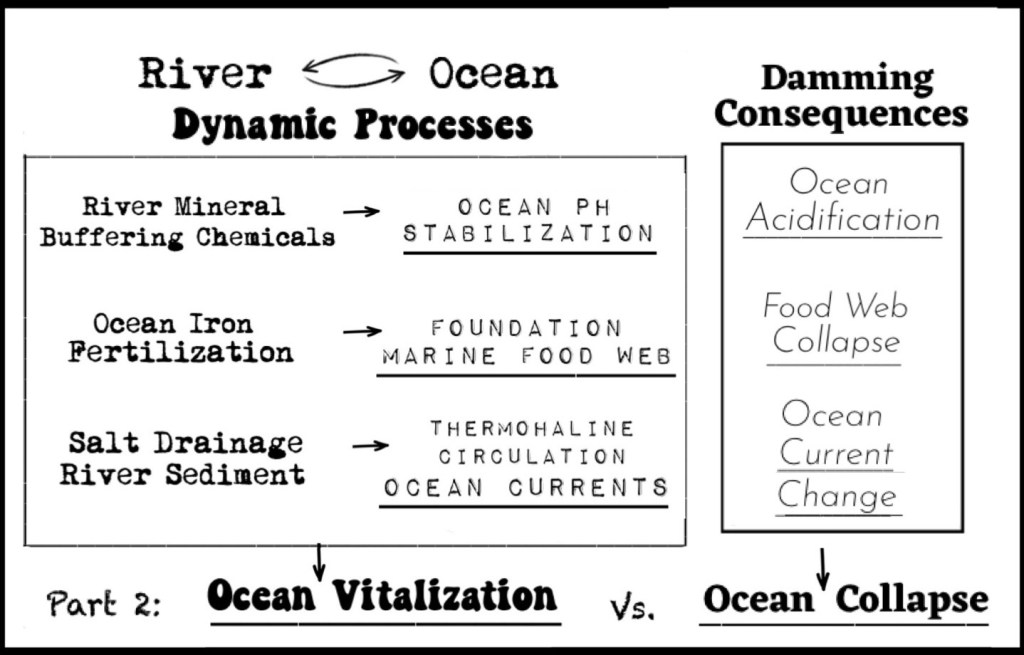
Scientists didn’t worry about Ocean CO2 Absorption, assuming river rock chemicals keep the ocean’s pH stable (buffering). – (NOAA / Smithsonian)
VS.
Scientists now appreciate the life-giving effects of river sediment, trapped behind dams. – (YALE)
PREMISE

References
- Morris CE, Conen F, Alex Huffman J, Phillips V, Pöschl U, Sands DC. Bioprecipitation: a feedback cycle linking earth history, ecosystem dynamics and land use through biological ice nucleators in the atmosphere. Glob Chang Biol. 2014 Feb;20(2):341-51. doi: 10.1111/gcb.12447. Epub 2013 Nov 26. PMID: 24399753.
- Morris, C. and Sands, D. (2017). Impacts of Microbial Aerosols on Natural and Agro-ecosystems: Immigration, Invasions, and their Consequences. In Microbiology of Aerosols (eds A.-M. Delort and P. Amato). https://doi.org/10.1002/9781119132318.ch4b
- Mayer KJ, Wang X, Santander MV, Mitts BA, Sauer JS, Sultana CM, Cappa CD, Prather KA. Secondary Marine Aerosol Plays a Dominant Role over Primary Sea Spray Aerosol in Cloud Formation. ACS Cent Sci. 2020 Dec 23;6(12):2259-2266. doi: 10.1021/acscentsci.0c00793. Epub 2020 Nov 25. PMID: 33376786; PMCID: PMC7760463.
- Amato P, Joly M, Besaury L, Oudart A, Taib N, Moné AI, et al. (2017) Active microorganisms thrive among extremely diverse communities in cloud water. PLoS ONE 12(8): e0182869. doi: 10.1371/journal.pone.0182869
- Failor, K., Schmale, D., Vinatzer, B. et al. Ice nucleation active bacteria in precipitation are genetically diverse and nucleate ice by employing different mechanisms. ISME J 11, 2740–2753 (2017). https://doi.org/10.1038/ismej.2017.124
- Zhao, D. F. et al. Environmental conditions regulate the impact of plants on cloud formation. Nat. Commun. 8,14067 doi: 10.1038/ncomms14067 (2017).
- https://www.science.org/content/article/meet-obscure-microbe-influences-climate-ocean-ecosystems-and-perhaps-even-evolution
- Schiermeier, Q. ‘Rain-making’ bacteria found around the world. Nature (2008). https://doi.org/10.1038/news.2008.632
- China, S., Burrows, S.M., Wang, B. et al. Fungal spores as a source of sodium salt particles in the Amazon basin. Nat Commun 9, 4793 (2018). https://doi.org/10.1038/s41467-018-07066-4
- Street JH, Paytan A. Iron, phytoplankton growth, and the carbon cycle. Met Ions Biol Syst. 2005;43:153-93. doi: 10.1201/9780824751999.ch7. PMID: 16370118.
- Mayer KJ, Wang X, Santander MV, Mitts BA, Sauer JS, Sultana CM, Cappa CD, Prather KA. Secondary Marine Aerosol Plays a Dominant Role over Primary Sea Spray Aerosol in Cloud Formation. ACS Cent Sci. 2020 Dec 23;6(12):2259-2266. doi: 10.1021/acscentsci.0c00793. Epub 2020 Nov 25. PMID: 33376786; PMCID: PMC7760463.
- Helmholtz Centre for Ocean Research Kiel (GEOMAR). (2017, May 19). Iron deficiency restrains marine microbes: Scientists discover important process in the nutrient cycles of the tropical North Atlantic. ScienceDaily. Retrieved October 6, 2022 from www.sciencedaily.com/releases/2017/05/170519083628.htm
- Browning, T., Achterberg, E., Yong, J. et al. Iron limitation of microbial phosphorus acquisition in the tropical North Atlantic. Nat Commun 8, 15465 (2017). https://doi.org/10.1038/ncomms15465
- https://earthobservatory.nasa.gov/global-maps/MY1DMM_CHLORA
- https://www.noaa.gov/education/resource-collections/marine-life/aquatic-food-webs
- Boyce, D., Lewis, M. & Worm, B. Global phytoplankton decline over the past century. Nature466, 591–596 (2010). https://doi.org/10.1038/nature09268
- https://www.scientificamerican.com/article/phytoplankton-population/
- https://oceanservice.noaa.gov/ecosystems/coastal-blue-carbon/
- Niall M Mangan, Michael P Brenner (2014) Systems analysis of the CO2 concentrating mechanism in cyanobacteria eLife 3:e02043
- Parnell, J., Brolly, C. Increased biomass and carbon burial 2 billion years ago triggered mountain building. Commun Earth Environ 2, 238 (2021). https://doi.org/10.1038/s43247-021-00313-5
- https://e360.yale.edu/features/why-the-worlds-rivers-are-losing-sediment-and-why-it-matters
- Helfield, J.M. and Naiman, R.J. (2001), EFFECTS OF SALMON-DERIVED NITROGEN ON RIPARIAN FOREST GROWTH AND IMPLICATIONS FOR STREAM PRODUCTIVITY. Ecology, 82: 2403-2409. https://doi.org/10.1890/0012-9658(2001)082[2403:EOSDNO]2.0.CO;2
- Scott M. Gende, Richard T. Edwards, Mary F. Willson, Mark S. Wipfli, Pacific Salmon in Aquatic and Terrestrial Ecosystems: Pacific salmon subsidize freshwater and terrestrial ecosystems through several pathways, which generates unique management and conservation issues but also provides valuable research opportunities, BioScience, Volume 52, Issue 10, October 2002, Pages 917–928, https://doi.org/10.1641/0006-3568(2002)052[0917:PSIAAT]2.0.CO;2
- Wagner MA, Reynolds JD (2019) Salmon increase forest bird abundance and diversity. PLoS ONE 14(2): e0210031. doi: 10.1371/journal.pone.0210031
- https://ocean.si.edu/ocean-life/invertebrates/ocean-acidification
- Stets, E. G., Butman, D., McDonald, C. P., Stackpoole, S. M., DeGrandpre, M. D., and Striegl, R. G. (2017), Carbonate buffering and metabolic controls on carbon dioxide in rivers, Global Biogeochem. Cycles, 31, 663– 677, doi:10.1002/2016GB005578.
- https://www.enviro.wiki/index.php?title=PH_Buffering_in_Aquifers
- https://grounded.org/how-salmon-and-steelhead-link-oceans-rivers-and-forests/
- https://en.m.wikipedia.org/wiki/Thermohaline_circulation
- https://opentextbc.ca/geology/chapter/18-4-ocean-water/
- https://www.brighthubengineering.com/geotechnical-engineering/71200-negative-impacts-of-hydroelectric-dams/
- https://www.adfg.alaska.gov/index.cfm?adfg=wildlifenews.view_article&articles_id=407
- https://www.mass.gov/info-details/small-dams-have-large-impacts-on-water-quality
- https://www.sdsmt.edu/News/Stock-Dam-Saltwater-Study/#.Y0DUMuRHYlR
- Leonard B Lerer, Thayer Scudder, Health impacts of large dams, Environmental Impact Assessment Review, Volume 19, Issue 2, 1999, Pages 113-123, ISSN 0195-9255, https://www.sciencedirect.com/science/article/pii/S0195925598000419
- Mousing, E.A., Richardson, K., Bendtsen, J., Cetinić, I. and Perry, M.J. (2016), Evidence of small-scale spatial structuring of phytoplankton alpha- and beta-diversity in the open ocean. J Ecol, 104: 1682-1695. https://doi.org/10.1111/1365-2745.12634
- https://www.hrwc.org/dams-methane-huron-river/
It is estimated the power needed to lift sap to plants’ foliage worldwide, is almost as much as all hydroelectric power generated globally.
Sciencenews
Summarized overview with accompanying diagrams below.
⬇️⬇️⬇️⬇️⬇️⬇️⬇️⬇️⬇️⬇️⬇️
Vegetation & Microbial Cloud Formation
Terrestrial Vegetation
Bioprecipitation, Ecosystem Dynamic Feedback Cycle & Cloud Nucleation
Clouds as Biologically active landscapes, generate aerosols containing microorganisms capable of catalyzing ice crystal formation at near 0 °C. The resulting precipitation benefits plant & microorganism growth.
NCBI
Trees & Plants, Cloud Condensation Nuclei
Terrestrial vegetation emits large amounts of volatile organic compounds (VOC), which on oxidation produce secondary organic aerosol (SOA). As cloud condensation nuclei (CCN), SOA influences cloud formation & climate.
NCBI
Evidence of Rain-Making Bacteria Found Worldwide
Airborne microbes — bacteria, fungi, algae — catalyze ice formation at close to 0 ºC, unlike mineral aerosols. Bacteria that cause plant frost damage, help clouds to produce rain and snow. Studies suggest ‘bio-precipitation’ is common.
Nature
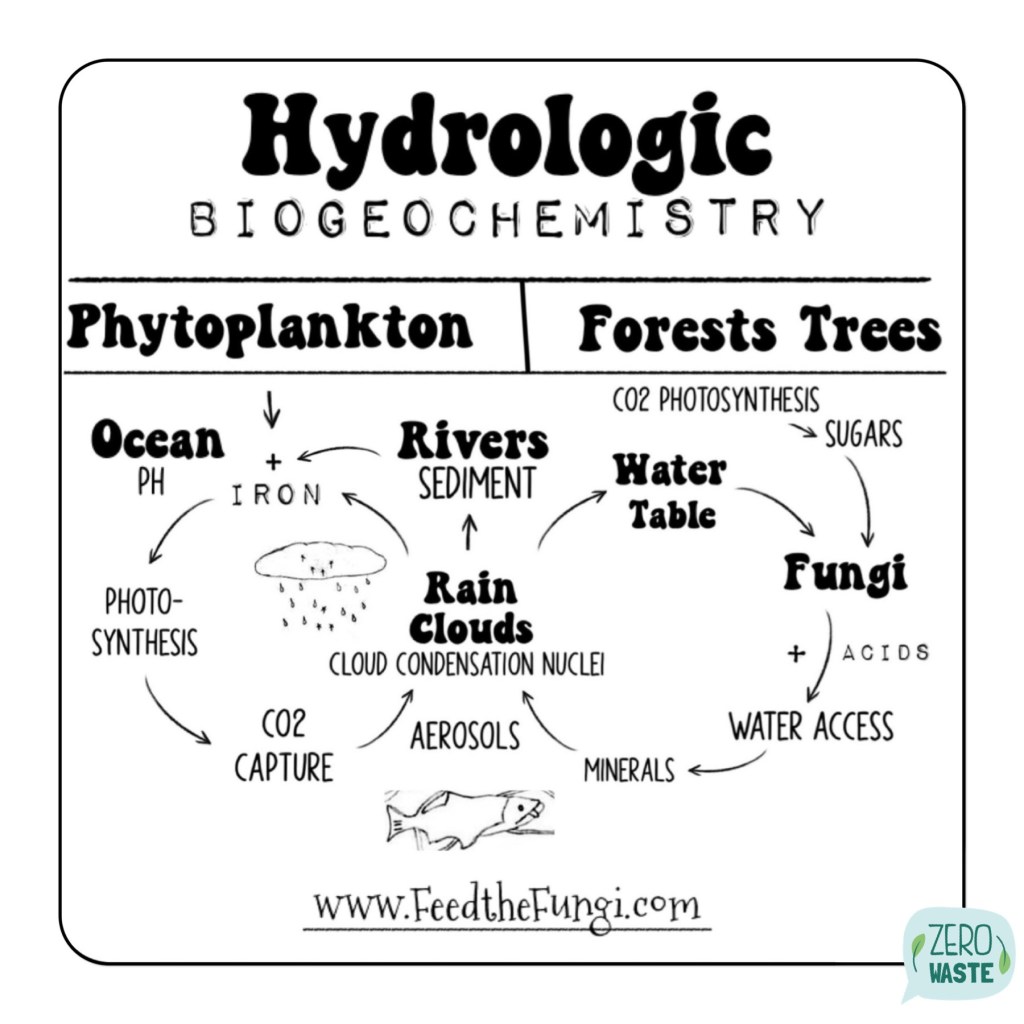
Marine Vegetation Create Clouds
Phytoplankton Biomass (Chlorophyll)- Dominant Role in Cloud Formation
Secondary marine aerosols, correlate with phytoplankton biomass (chlorophyll-a concentrations), whereas primary sea spray aerosol does not. CCN activity suggests secondary marine aerosols play the dominant role in affecting marine cloud properties.
NCBI
Phytoplankton, Iron, CO2 Biomass Growth & The Carbon Cycle
Iron is required for the synthesis of chlorophyll. Low iron concentrations have been shown to limit primary production rates, biomass accumulation.
NCBI
Phytoplankton: Cyanobacteria, CO2 Accumulation
Cyanobacteria are photosynthetic bacteria with a unique CO2 concentrating mechanism (CCM), enhancing carbon fixation.
NCBI
Cyanobacteria, CO2 Biomass & Mountains
Cyanobacteria anomalously high organic Carbon burial, shows sudden widespread mountain building with 2.3 Billion year old Great Oxidation Event.
Nature
Microbial Cloud Communities
Active Microorganisms in Cloud Hydrology
Clouds are key components in Earth’s functioning acting as obstacles to light radiation, and chemical reactors. Atmospheric oases for airborne microorganisms, providing water, nutrients and paths to the ground.
NCBI
Amazon Fungi Create Rain
In the Amazon rain forest, fungi’s salty particles make clouds & rain, according to new research.
Nature
Microbes Influence Climate, Ocean Ecosystems & Possibly Evolution – Science
EARTHS WATER DISPERAL SYSTEM
We can only forecast weather by looking at the entire Earth.
Bioprecipitation – Microbes, Fungi & Bacteria – being common, the health of every major ecosystem… is indeed the crux in predictable, steady, weather patterns.
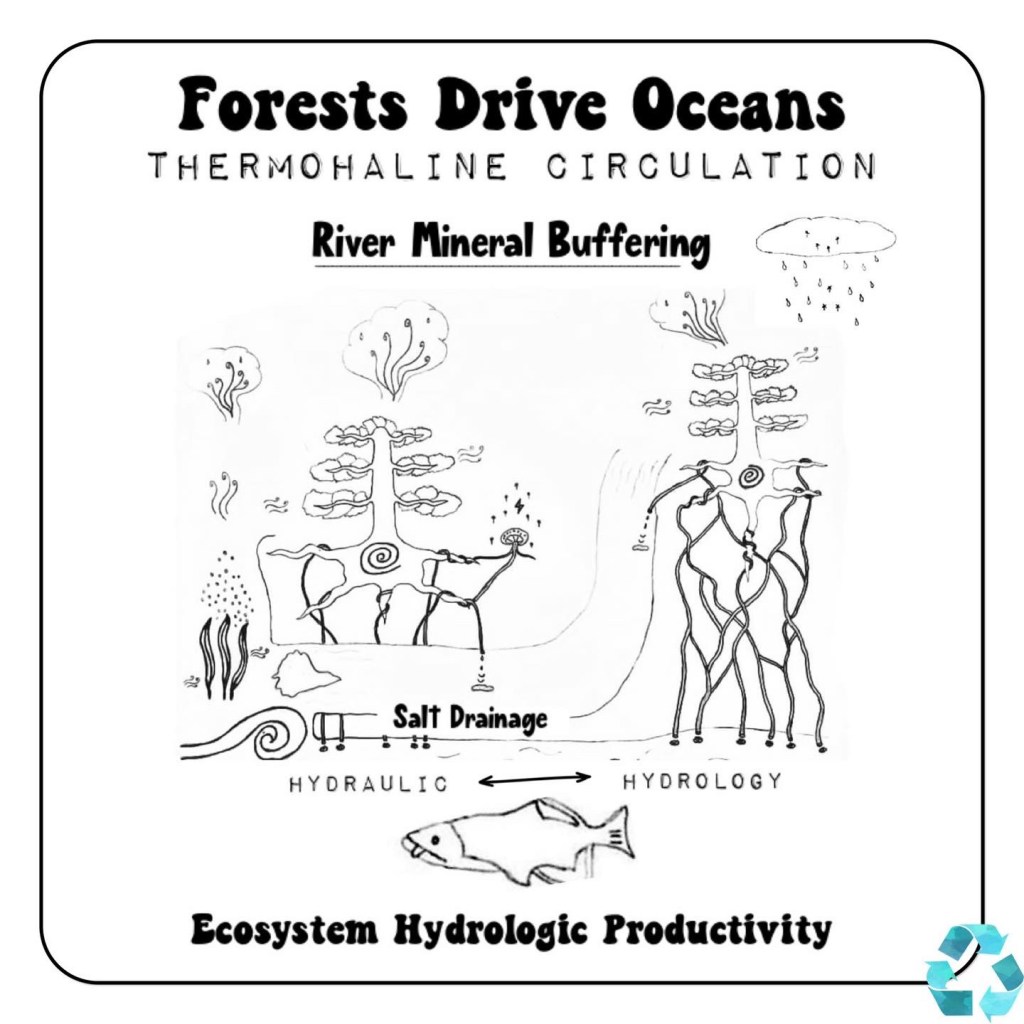
- Iron Fertilization By River Sediment
- Ocean Acidification – River Stabilization
- Carbon Cycle Capture
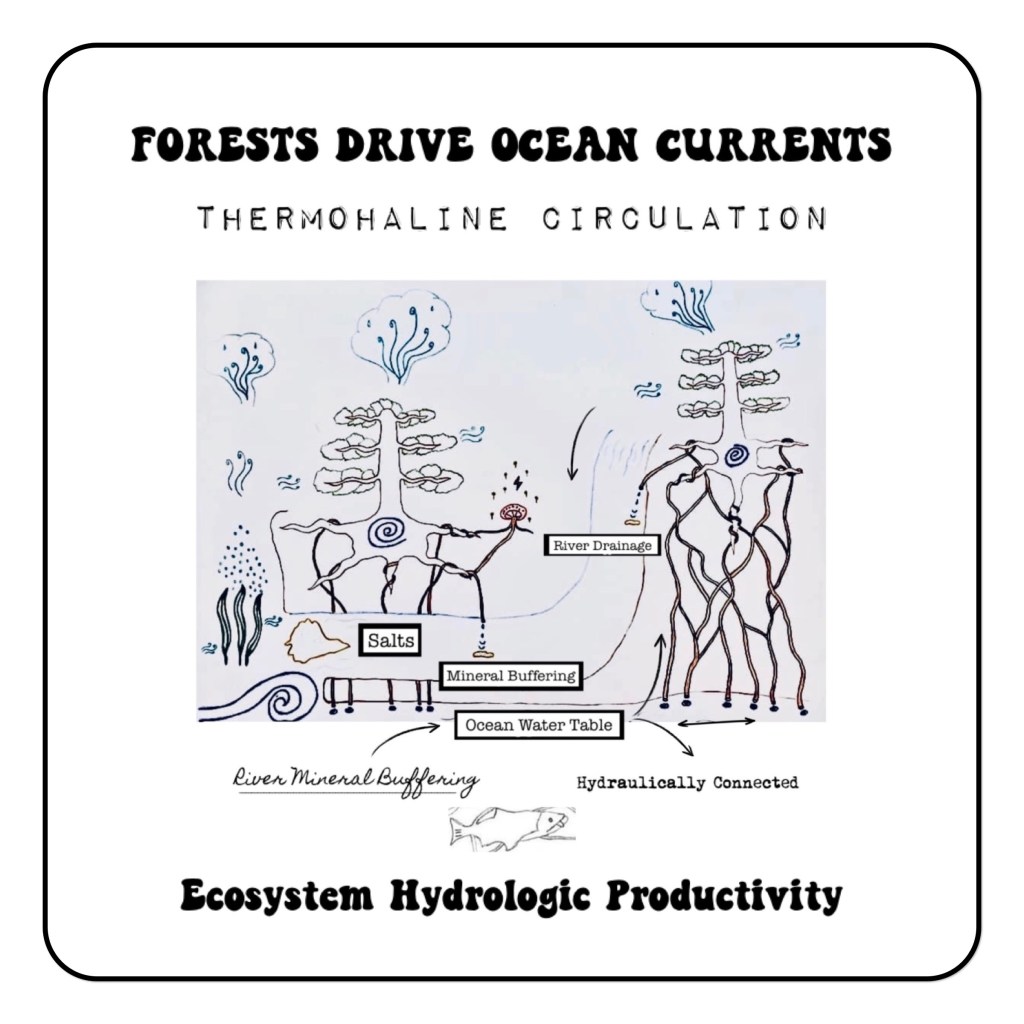
- Thermohaline Circulation, Mineral/Chemical Balance of Ocean & Forest Ecosystems. (Biogeochemistry)
- Marine Cloud Formation – Precipitation
ECOSYSTEM NUTRITION
Ocean Phytoplankton – Aerosols
In Phytoplankton, Iron is required for the Synthesis of Chlorophyll.
NCBI
Chlorophyll-a concentration, biomass accumulation drives Aerosol production by Phytoplankton & subsequent Marine Cloud Formation.
NCBI
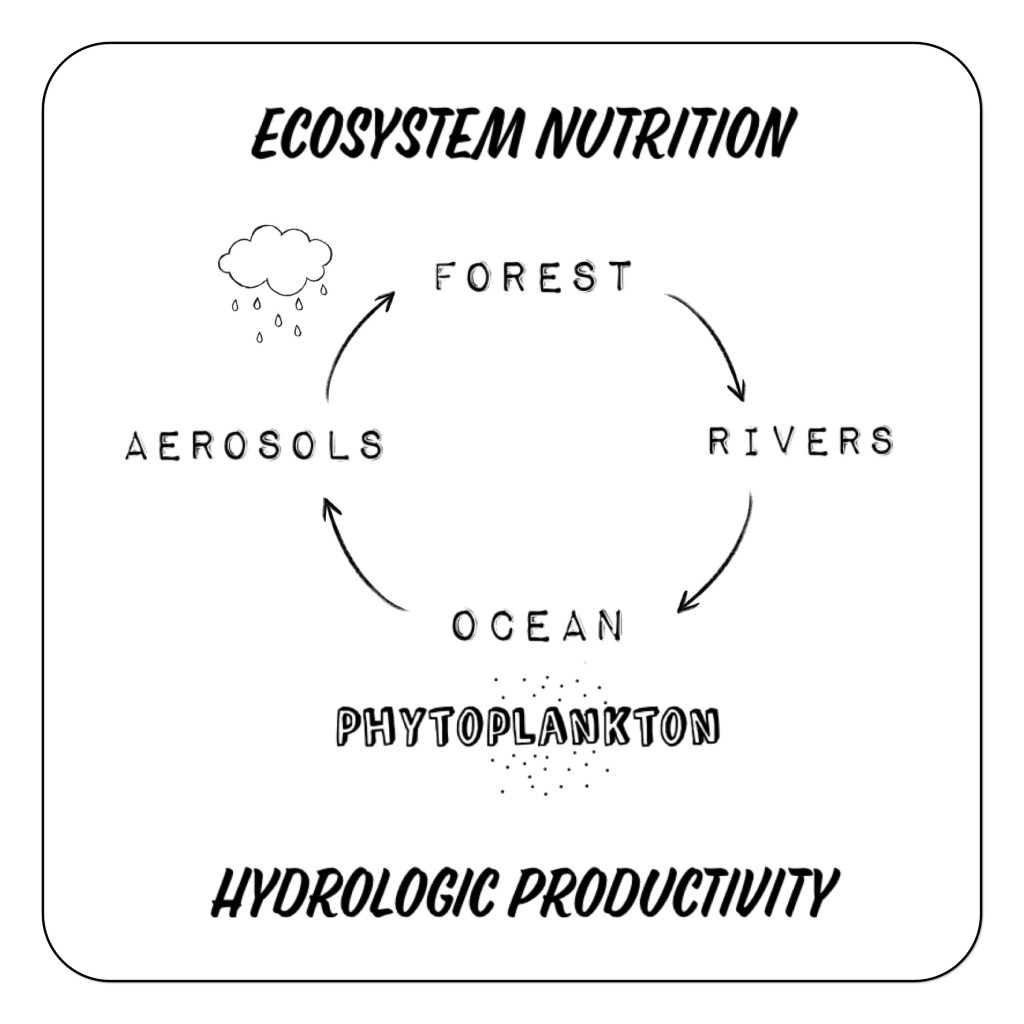
GROWTH IN THE CARBON CYCLE
- Accumulates CARBON BIOMASS
- Releases Aerosols (Cloud Condensation Nuclei)
- Drives Hydrologic Cycle, RAINFALL
Iron Fertilizing River Sediment
River Sediment must run into the Ocean to deliver vital nutrients, including Salts to support the Thermohaline Circulation & Iron.
“It’s almost like it’s the food — the nutrients, minerals, and vitamins — these systems need to grow and adapt, and we are starving them of that.”
Rivers are Losing Sediment – YALE
DAMS BLOCK RIVER MINERAL BUFFERING FREE THE RIVERS –
Ocean Acidification – River Stabilization
Scientists formerly didn’t worry about this process (CO2 Ocean Absorption) because they always assumed that rivers carried enough dissolved chemicals from rocks to the ocean to keep the ocean’s pH stable. (Scientists call this stabilizing effect “buffering.”)
Smithsonian
MEANWHILE…
Dams erected blocked river mineral buffering sediment and chemicals.
Rivers are Losing Sediment
Scientists are now beginning to fully appreciate the life-giving effects of sediment.
YALE
Thermohaline Circulation, Mineral/Chemical Balance of Ocean & Forest Ecosystems. (Biogeochemistry)
Vast amounts of river-borne sediment are trapped behind the world’s large dams, depriving downstream areas, marshes, wetlands & coastal habitat to grow, adapt, and maintain themselves.
YALE
You can lead a horse to water, but only if there is any left.
Continue reading “— Climate & Precipitation — Biologically Bonded to Ecosystem Health, Biogeochemistry.”
 The Roots of Climate Change
You must be logged in to post a comment.